
Finding a cohesive outfit on a Tuesday morning, with a closet full of impulsively bought pieces, remains the real daily style problem. The fashion trends of 2024 are not just a list of colors or cuts seen on the runways. They pose a more concrete question: how to transform these inspirations into sustainable, wearable clothing choices that suit one’s body shape.
Bright colors and neutral basics: creating a versatile wardrobe in 2024
You open the closet and find three colorful tops that don’t match anything. The problem rarely lies with the pieces themselves, but rather with the lack of a neutral foundation to accommodate them.
The spring-summer 2024 runways confirmed the return of bold colors (red, bright yellow, deep blue). But in practice, a colorful piece only works if it is supported by two or three solid basics: a straight navy pant, a well-cut white t-shirt, a structured beige coat.
Before investing in a red dress or a yellow blazer spotted on social media, one should check if the foundation exists. This reflex avoids orphan purchases that end up at the back of the drawer. This type of practical advice can regularly be found on the fashion category of Les Carnets du Web, where inspirations are linked to concrete combinations.
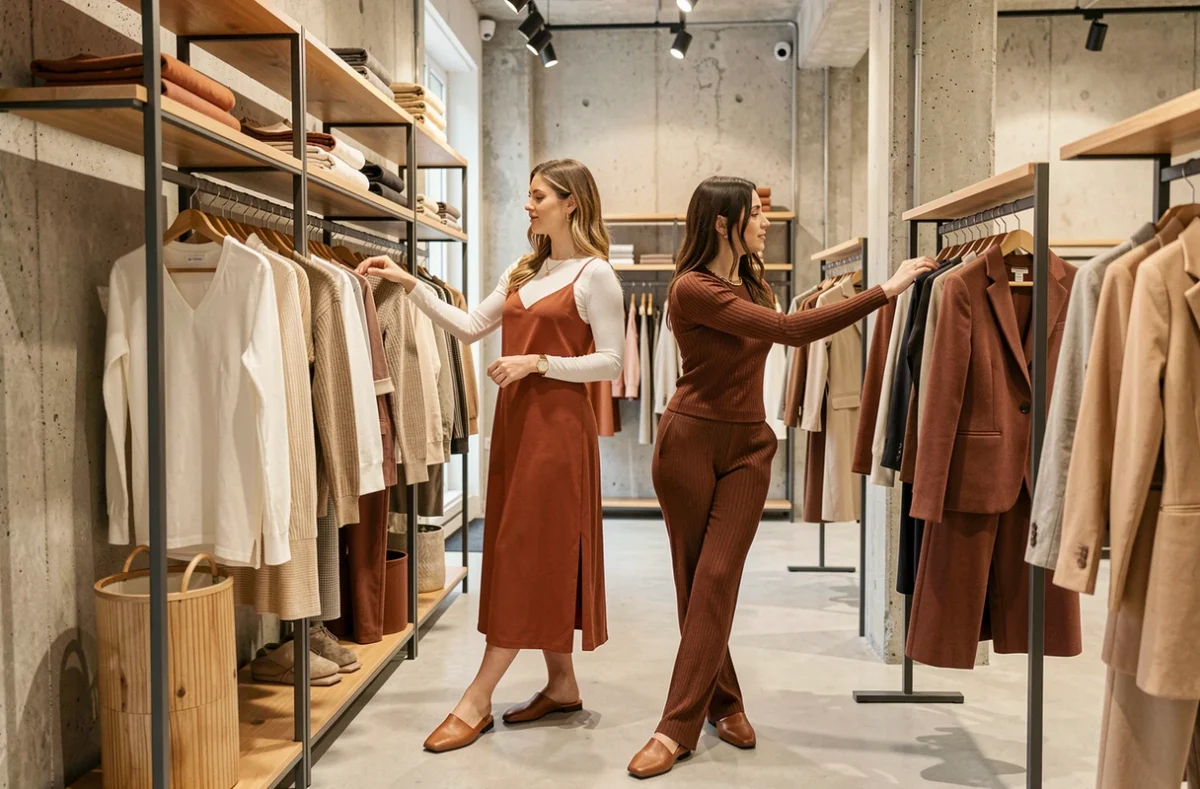
Brown, for example, is gradually replacing black as the go-to shade. A raw denim paired with chocolate boots and a cream sweater creates an autumn-winter base on which any strong piece can effortlessly rest.

Sustainable fashion trends: resale, repair, and the Repair Bonus in France
Buying a trendy jacket to wear three times and then leaving it to hang on a hanger is expensive and takes up space. Fashion in 2024 is characterized by a shift in perspective: we evaluate a piece not only by its style but also by its resale ease and its ability to last several seasons.
The second-hand market is growing faster than traditional clothing. Several brands are launching their own resale programs directly. For consumers, the reflex to adopt is simple: at the time of purchase, ask whether the piece will still be wearable in two years and if someone would want to buy it.
The Repair Bonus, a concrete lever to extend the life of your clothes
In France, the Repair Bonus (stemming from the AGEC law and managed by Refashion) allows for a direct discount at certified repairers. No form to fill out in advance: the discount applies at the checkout, and its amount depends on the type of intervention (sewing, zipper replacement, etc.).
A pair of jeans with a broken seam or a coat with a torn lining are no longer pieces to throw away. Availability of repairers varies by area, but the system exists and is worth testing before any repurchase.
Building a daily outfit: layering method and mixed pieces
The trends of 2024 highlight silhouettes that play with layering. In practical terms, we’re talking about outfits designed in three levels: a body-hugging base, a structuring intermediate piece, and an outer element that sets the tone.
Here are the criteria we apply when composing an outfit for the week:
- The base (t-shirt, tank top, shirt) should be comfortable and neutral to accept different combinations throughout the autumn-winter season as well as in spring.
- The intermediate piece (vest, blazer, oversized cardigan) provides the silhouette. It often carries the current trend without requiring a complete wardrobe overhaul.
- The outer element (coat, denim jacket, trench) protects and punctuates the style. A single well-chosen coat can dress up ten different outfits.
The shirt, for example, crosses all wardrobes in 2024. Worn open over a t-shirt, tucked into high-waisted pants, or tied at the waist over a midi dress, it adapts to all body shapes and blurs gender codes.
Materials and traceability: reading labels before following a trend
The European framework is evolving towards transparency requirements regarding the composition, origin, and end-of-life of clothing. The precise modalities are yet to be defined, but the direction is clear: vague mentions like “eco-friendly” without traceable data are becoming risky for brands.
For consumers, this translates into a concrete action at the time of purchase. Before falling for a piece spotted on a runway or social media, one should turn the label over and check three points:
- The exact composition of the fabric (percentage of natural fibers, presence of synthetic materials).
- The country of manufacture, which gives an indication of production conditions.
- The care instructions, which directly affect the lifespan of the garment. A fabric that only withstands dry cleaning costs more to maintain than a machine-washable cotton.
This information does not replace aesthetic appeal but helps distinguish a durable piece from a disposable purchase. Composition and lifespan become style criteria in their own right, on par with cut or color.
Oversized and structured cuts: two lines coexisting this season
The 2024 collections oscillate between oversized pieces (broad-shouldered blazers, loose pants) and more fitted cuts (cinched midi dresses, bralette tops). These two directions do not exclude each other. Personal style is built by choosing a dominant axis, not by stacking all trends.
A coherent wardrobe relies on three or four strong pieces renewed each season, paired with stable basics. The rest is just noise.