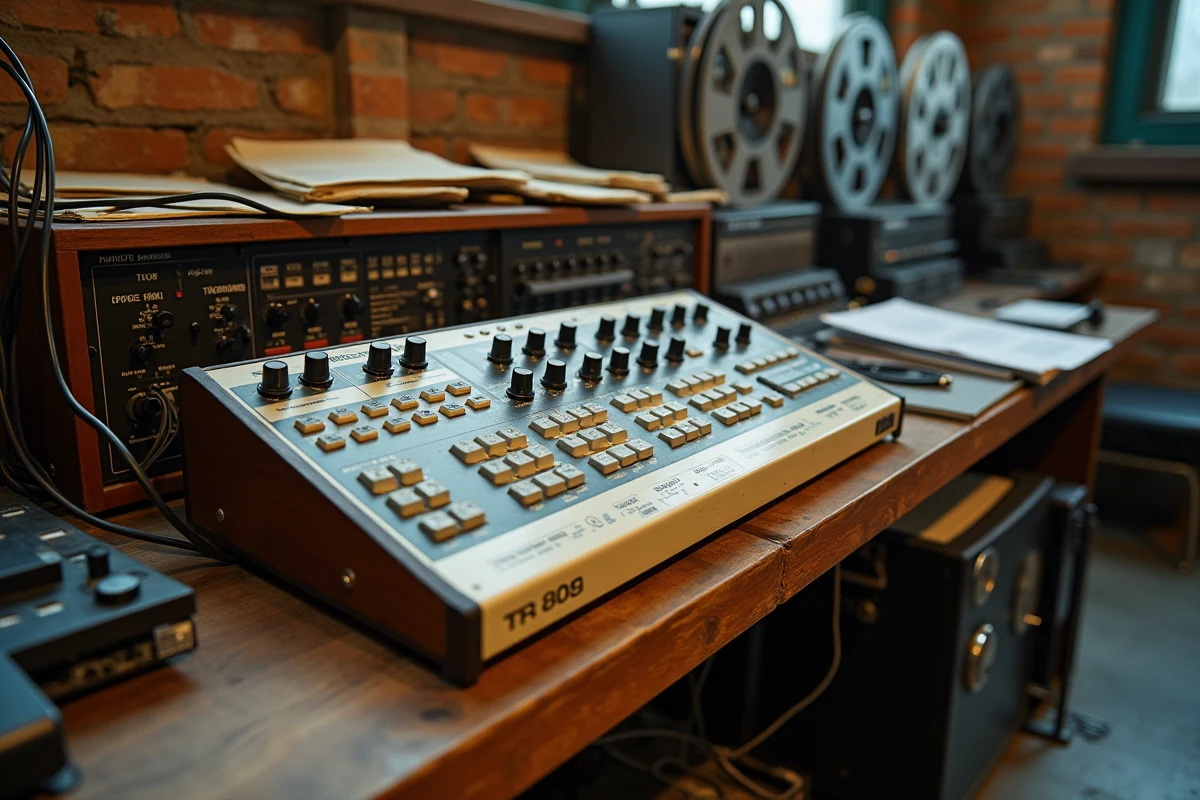
The kick that makes car speakers tremble, the bass that saturates headphones on the subway, the deep and long sound that opens most current trap tracks: all of this has a name. Three digits, to be precise.
The 808 refers to a synthetic kick drum sound born from a Japanese drum machine, the Roland TR-808, released in 1980. Since then, this timbre has traversed hip hop, electronic music, pop, and French rap to become a recognizable sonic signature in just a few milliseconds.
808 Bass and Over-Saturation in Streaming Mixes
Have you ever noticed that a trap track sometimes sounds duller, less dynamic than a rock song on Spotify or Apple Music? The reason lies partly in the 808s themselves.
The 808 kick relies on a deep sine wave with a long sustain. When a producer layers this bass over a separate sub-bass, the low-end spectrum of the track concentrates considerable energy. In the studio, the result can seem impressive. On a streaming platform, the problem begins.
Services like Spotify apply loudness normalization so that the listener doesn’t have to adjust the volume between tracks. Songs mixed very loudly are automatically reduced. However, an overloaded mix with 808 bass loses clarity after normalization, because the algorithm lowers the overall volume without distinguishing frequencies. The kick loses its impact, the vocals recede, and the track seems muffled.
For trap and rap producers, this creates a real technical dilemma. Push the 808s to achieve the sound expected by the audience, or mix more balanced to ensure the track survives normalization. Some sound engineers circumvent the problem by filtering sub-frequencies below 30 Hz and working on the harmonic saturation of the 808 kick. The idea: to give the impression of a massive bass without the actual energy being concentrated in the extreme low end.
To learn more on Web United, the topic of the 808 goes beyond mere nostalgia for an analog machine and directly touches on current broadcasting constraints.
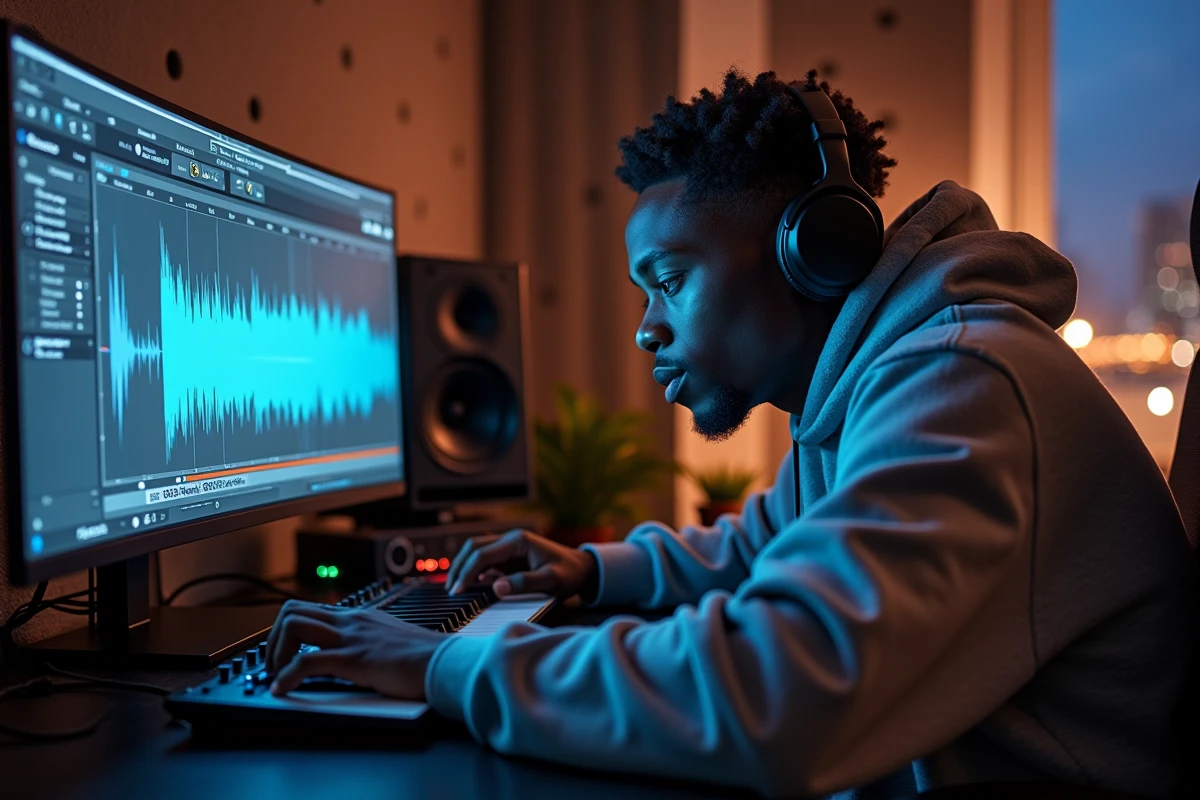
Roland TR-808: How a Commercial Failure Changed Music Production
The TR-808 was released in 1980, designed by Ikutaro Kakehashi at Roland. The device uses analog circuits to generate its drum sounds. No recorded samples, no realistic sounds: everything is synthesized electronically.
The result does not please musicians of the time. Drummers find the sounds artificial. Professional studios prefer the Linn LM-1, which uses real drum samples. Roland ceased production of the TR-808 after about three years due to insufficient sales.
What happens next is a story of creative repurposing. The second-hand price drops, and artists who cannot afford more expensive equipment seize it. The artificial sound, deemed a flaw by purists, becomes a quality for those looking to create something new.
Genres Built Around the TR-808
Several musical currents have literally been built around this machine:
- 1980s hip hop, where the 808 kick replaces the acoustic bass drum and lays the foundations for rap as we know it. Afrika Bambaataa uses it on “Planet Rock,” a track that marks a turning point.
- Electronic music (house, techno) relies on the hi-hats, claps, and cowbells of the 808 to create repetitive and hypnotic rhythms suited for clubs.
- Mainstream pop incorporates the 808 from the early 1980s. Marvin Gaye uses it on “Sexual Healing,” proving that the machine can break out of the underground circuit.
The TR-808 was adopted precisely because it did not sound like a real drum. It is this embraced artificiality that gave it its identity.
From Analog Kick to Cloud Plugin: How Producers Use the 808 Today
Finding an original TR-808 in working condition is expensive, sometimes costing several thousand euros. Most current producers have never touched the physical machine. They work with samples or software emulations.
Roland offers its own dematerialized version via Roland Cloud, which replicates the behavior of the original analog circuit. Other publishers integrate 808 sound banks into their virtual instruments. The result is accessible from a laptop, which has contributed to the massive democratization of the 808 sound in music production.
This accessibility has a direct effect on the French rap scene and the hexagonal trap. Artists and beatmakers can produce tracks with 808 bass from a bedroom, without a professional studio. The sound that once required a rare analog device is now available with just a few clicks.
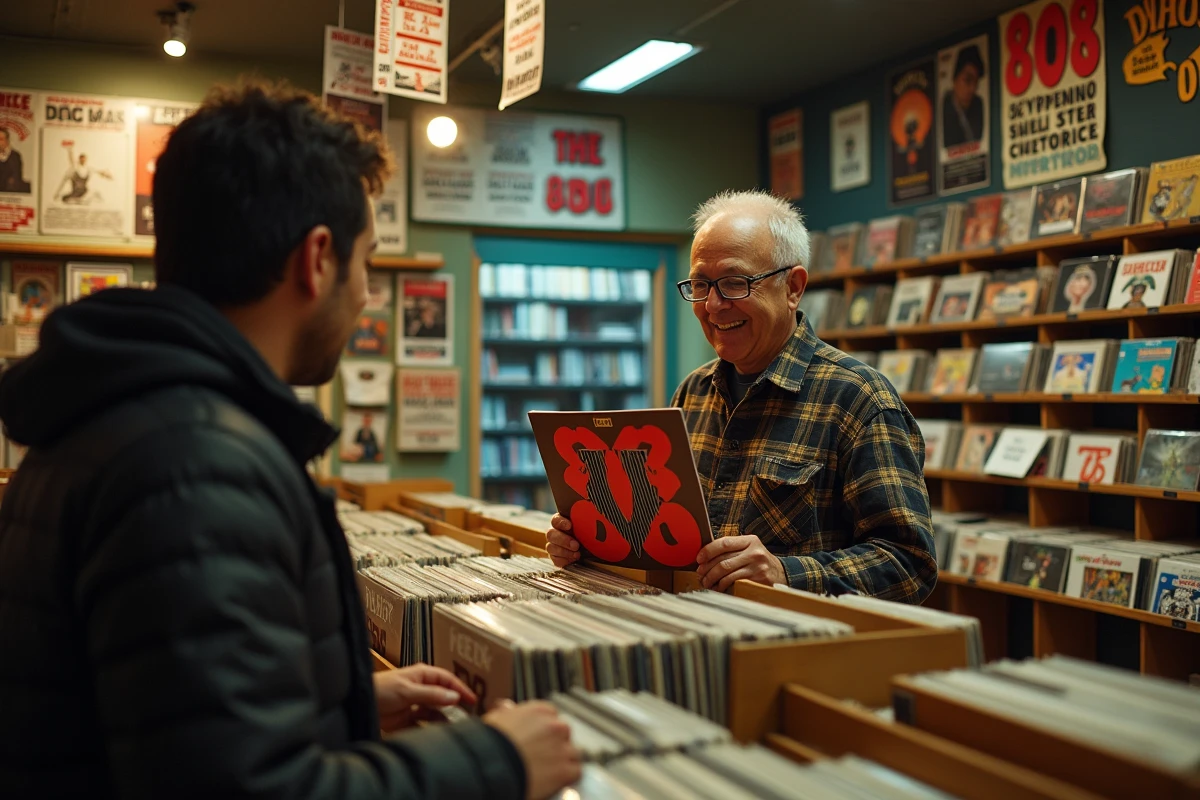
808 and AI Production Tools
Since 2024, AI music generation platforms (Suno, Udio) have integrated 808 samples to simulate trap bass. The 808 sound serves as a reference for the AI to produce results perceived as authentic by the audience.
808 in Rap and Trap: A Style That Became a Production Standard
The term “808” no longer refers only to a sound. In the vocabulary of producers and the rap audience, it denotes an entire production style. An “808 beat” implies a long, deep kick, fast and rolled hi-hats, and a minimalist construction leaving space for vocals.
Kanye West helped re-establish the 808 at the center of pop culture with the album “808s & Heartbreak” in 2008. The album title is a direct homage to the machine. Since then, the majority of trap tracks, from the American scene to the French scene, rely on 808 elements.
The 808 adapts to musical traditions far removed from its origins, including in scenes where producers blend the 808 kick with local rhythms to reach new audiences on streaming platforms.
An analog device abandoned by its manufacturer, reclaimed by budgetless artists, and transformed into the most widespread sound in global popular music: the journey of the 808 illustrates how musical innovation often arises from an accident rather than a plan. Streaming platforms and generative AI tools continue to transform how this sound circulates, with no signs of its impact on music production diminishing.