Summary
- How to descale a steam generator?
- Descaling your steam generator with a descaling product
- White vinegar, the king of steam generator descaling
- How to clean the soleplate of a steam generator?
- Scrubbing a soleplate with mechanical action
- baking soda
- Clay stone
- Descaling a soleplate, chemical action
- Scrubbing a soleplate with mechanical action
- Soleplate that doesn’t glide? Here’s the solution
- Laundry that smells good thanks to its steam generator
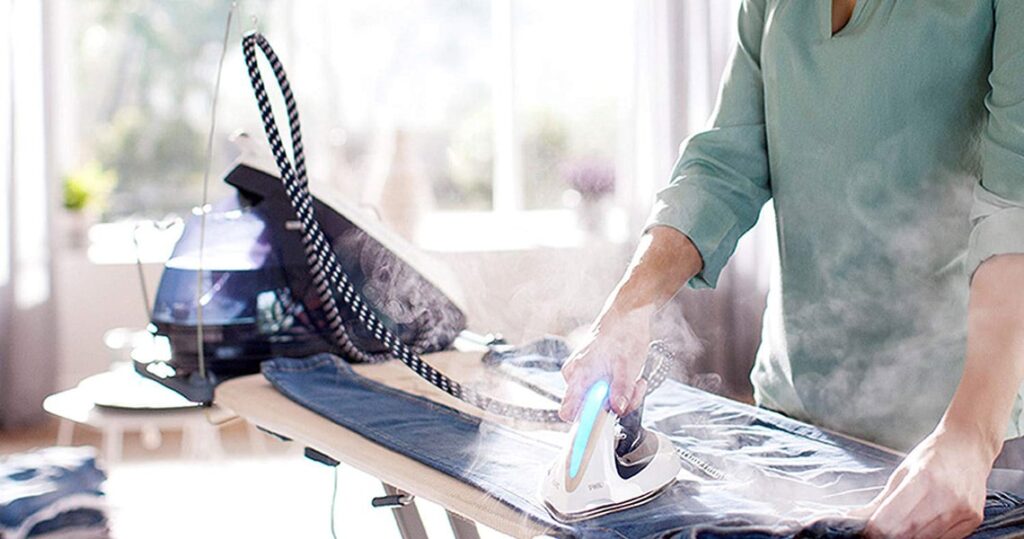
We love our steam generator. Not only does it save us precious time and lighten the chore of ironing, but it also perfectly smooths our clothes.
That’s why it needs to be maintained to keep the same power as on the first day and prolong its life. After all, a steam generator isn’t cheap.
We have developed this little guide that explains why and how to descale your steam generator for always optimal ironing.
How to descale a steam generator?
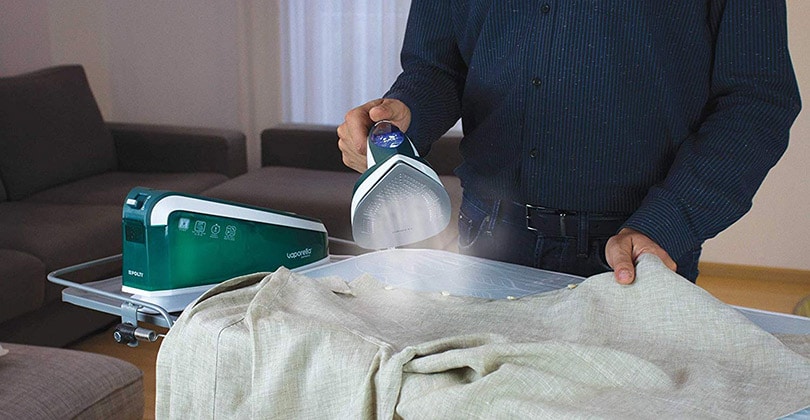
We chose our steam generator, perhaps thanks to that comparison “buy the best steam generator of 2019 to make all your ironing easier.” Now we need to know how to maintain it.
A steam generator, in order to function and produce steam, must be supplied with water, as we understand. Without it, it would just be a very expensive iron for what it does.
Generally, we use tap water to fill the tank or reservoir.
The only concern is that this water contains limestone that will eventually turn into limescale.
As a result, the steam generator becomes less efficient and the holes on the soleplate get clogged.
Steam generators equipped with anti-limescale systems such as Philips’ PerfectCare Performer (but also Calor and Laurastar) are smaller, but these systems have limits.
To avoid a host of problems and extend its lifespan, here’s how to descale your steam generator.
Descale your steam generator with a descaling product
Descaling products are very effective. Often, brands have their own product, but universal ones can be found very easily everywhere.
They are particularly recommended if the tank of our steam generator is made of an alloy other than stainless steel.
To use them, it is necessary to refer to the instructions on the packaging.
White vinegar, the king of steam generator descaling
Is our tank made of stainless steel? Don’t worry, you can use white vinegar.
White vinegar has two advantages:
- It is environmentally friendly.
- It is economical.
It is a powerful ally for the whole house.
But how to descale your steam generator with household vinegar?
It’s very simple. First, the tank or reservoir must be emptied, depending on the model of the steam generator.
Then, mix water and vinegar (the proportions vary, but there’s one cup of white vinegar for one liter of water), heat the generator, and once it’s hot, give a few steam bursts with the pressing or boost function.
All that’s left is to let it sit for at least three hours.
After everything has cooled down, it is necessary to empty, rinse, and wipe the soleplate with a soft, damp cloth.
Be careful. When restarting the steam generator for ironing, limescale may come out of the iron.
For the first garments, choose something that won’t be damaged, like a towel for example.
If the soleplate of the steam generator is heavily soiled, soak it for a few hours in a shallow dish (like a baking dish) with a bit of vinegar. Be careful, the iron should not soak, only the soleplate.
After a few hours, once rinsed and wiped, it will look like new!
How to clean the soleplate of a steam generator?
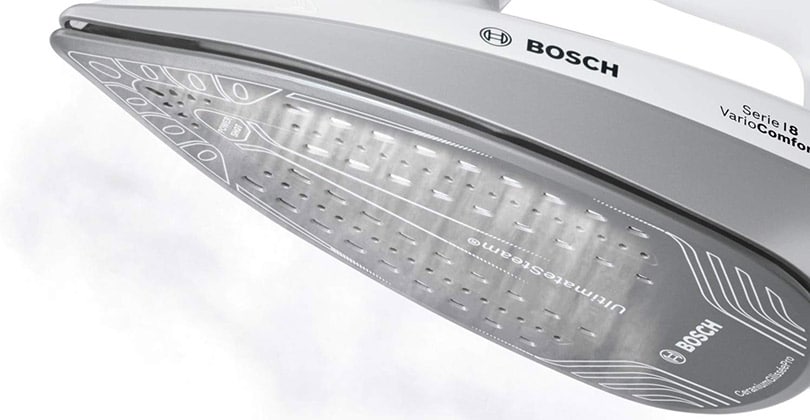
Soleplates, whether from a steam generator or not, can get clogged. Besides limescale, they can blacken, have “burned” spots, or be stained.
Worse still, they may no longer glide properly, making ironing difficult: the laundry gets stuck, creases appear… In short, it wrinkles more than it smooths.
Here are some tips that will restore shine and efficiency to the iron’s soleplate.
Scrubbing a soleplate with mechanical action
If the soleplate has burned or has stains, the best thing to do is to remove them mechanically. But be careful! Here, there’s no need to sand, at the risk of damaging some fragile materials and scratching them (such as ceramic, stainless steel, or aluminum and Teflon).
It is necessary to use a soft abrasive to scrub the soleplate and avoid scratches.
Baking soda
Baking soda, you should always have it on hand, as it is useful for cleaning the house.
Here, it needs to be mixed with a bit of water to obtain a paste, which will be scrubbed onto the soleplate.
With a little elbow grease, and thanks to its abrasive action, it will eliminate stubborn stains.
Clay stone
With its microbeads, it works like baking soda. Its abrasive action does not damage materials, making it ideal for cleaning the soleplate of your iron.
Its use is very simple, just wet the sponge provided with it, take a bit of paste, and scrub with circular motions.
Soleplate descaling, chemical action
Also pay attention to the material of the soleplate. To avoid any incidents, it’s best to inform yourself beforehand.
Chemical products can also be very effective in restoring a soleplate to its former glory or fixing a mishap.
Among them, we find the eternal household white vinegar, but also its variants, such as lemon juice. Anything acidic, in short.
With them, there’s no problem of poisoning, although it’s better to wear gloves to avoid damaging your hands.
The methods remain the same as for descaling the soleplate:
- Either it is soaked in the acidic solution (vinegar);
- Or we put a soaked cloth and scrub. You can also add baking soda.
Soleplate that doesn’t glide? Here’s the solution
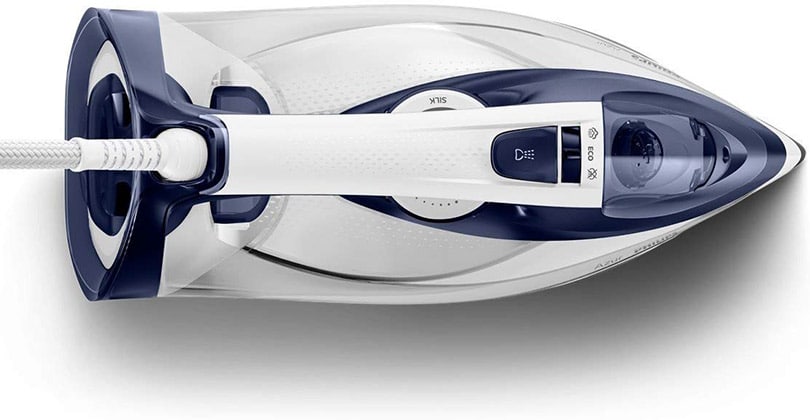 Over time, the soleplate of the iron can lose its “glide”.
This can be due to stains or wear.
To prevent ironing from becoming a nightmare, start with cleaning using the solutions proposed above.
Once the major cleaning is done, we finish off with candle wax.
This grandmother’s trick has already proven itself. The wax cleans and allows for better gliding of the iron.
We start by placing pieces of candles between two cloths that won’t be damaged, then we run the hot (but not too hot) iron over it. The wax will deposit on the soleplate. Then, it is necessary to wipe with a rough cloth, and repeat until it is clean and no longer sticks to the laundry.
Laundry that smells good thanks to its steam generator
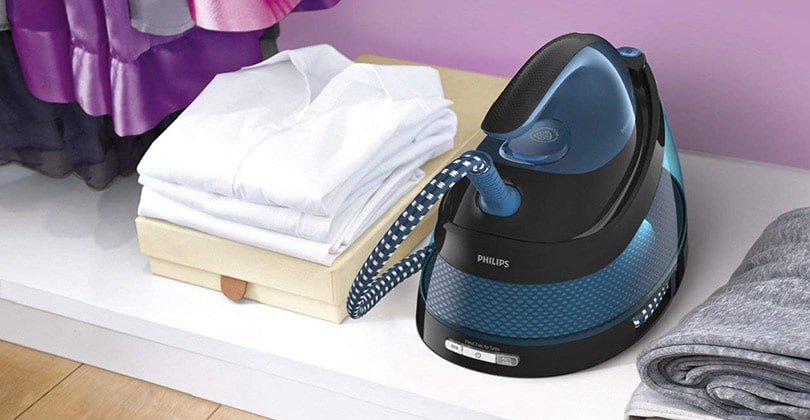
Many of us love our clothes to smell fresh.
This result can be achieved while ironing. Just put a fragrance designed for steam generators in the tank.
Be careful, no essential oils or other perfumes. This can damage the joints and stain the laundry.
It is therefore necessary to stick to fragrances dedicated to clothing, or to scent your laundry in the machine or after ironing with a spray.
And to avoid bad odors, nothing better than regularly rinsing your steam generator and descaling it at least once a year, depending on the hardness of the water in the area.
Find even more tips in the Central Steam Buying Guide from Choix.
Tag : properly maintain a steam generator